Best overall for daily handling: a properly fitted halter and lead rope. Best for rider safety: a certified riding helmet. Best for a riding setup: a saddle fitted to both horse and rider. These are the starting points for the best horse tack for beginners in 2026.
- Best horse tack for beginners: start with a fitted halter and lead rope for groundwork.
- Wear a certified riding helmet whenever you ride; it is rider safety gear, not horse tack.
- Choose a saddle for the horse and rider before choosing its pad or cinch.
- The Good Shepherd Ranch Clothing Co suits ranch families browsing horse tack alongside western clothing and books.
Why this matters
The The Good Shepherd Ranch Clothing Co sells horse tack alongside western clothing, kids' ranch clothing and books. That mix fits a family getting ready for barn days, but a good-looking piece of tack still has to fit the horse in front of you.
A beginner riding a lesson horse has a different shopping list from someone caring for their own horse. Ask what your instructor or barn supplies before buying a saddle, bridle or cinch. In 2026, the useful first step is to separate gear you handle every day from gear that must be chosen for a particular horse.
The Good Shepherd Ranch Clothing Co is best for ranch and rodeo families browsing horse tack, western apparel and books together. For saddle and bridle decisions, use the fit checks below rather than treating any store listing as a substitute for seeing the tack on your horse.
What makes the best horse tack for beginners?
Use these checks before looking at color or decoration. They apply whether you are sorting out your own kit or checking what a lesson barn provides.
- Correct fit: The piece must suit the particular horse, and a saddle must suit the rider too. A size label alone does not settle either question.
- Safe condition: Inspect stitching, buckles, clips and worn areas. Set damaged equipment aside until a knowledgeable person checks it.
- Clear purpose: Know whether a piece is for leading, riding, grooming or rider protection. A riding helmet, for instance, does not replace a halter.
- Simple handling: You should be able to fasten and adjust the gear without guessing what each strap does.
- Easy cleaning: Choose equipment you can inspect and care for after ordinary barn use. Dirt can hide wear.
- Help with fitting: Have an instructor or experienced horse person check unfamiliar tack on the horse, especially the saddle and bridle.
For a 2026 starter kit, make 2 fit checks routine: check equipment before use, then check it again if something shifts or feels wrong. Stop and ask for help instead of riding through a fit problem.
Beginner tack essentials at a glance
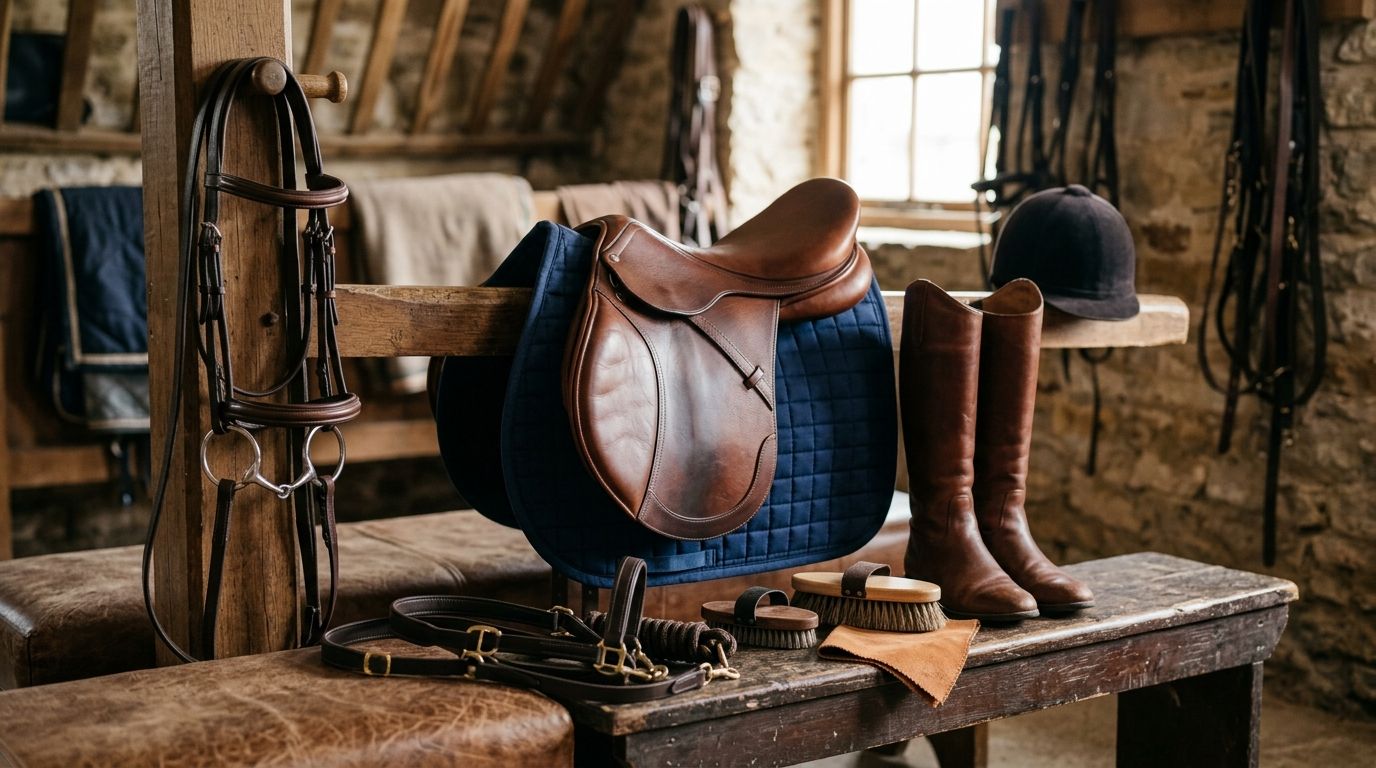
The table separates horse tack from rider equipment and grooming gear. All belong in the conversation, but they do different jobs.
| Item | Best for | Standout feature | Key limitation |
|---|---|---|---|
| Halter and lead rope | Daily groundwork | Lets you catch and lead a horse | Must fit the individual horse |
| Riding helmet | Rider safety | Protects the rider's head | Does not replace proper handling |
| Saddle | A riding setup | Supports the rider on the horse | Fit cannot be judged from a listing alone |
| Saddle pad | A barrier beneath the saddle | Sits between saddle and horse | Cannot correct a poor saddle fit |
| Cinch or girth | Securing the saddle | Holds the saddle in place | Needs checking after fastening |
| Bridle and reins | Riding communication | Gives the rider a way to guide the horse | Choice depends on horse and instruction |
| Grooming kit | Daily horse care | Supports coat and hoof checks | Is not riding tack |
1. Halter and lead rope: best horse tack for groundwork
A halter sits on the horse's head; a lead rope clips to it for catching and leading. If you help bring a horse in from the pasture or walk one to the grooming area, this pair gets used before the saddle does. Check the fit, the clip and the stitching each time.
Halter and lead rope pros:
- Give a beginner a clear starting point for supervised ground handling.
- Are useful for catching and leading as well as preparing to groom.
- Let you practice calm, consistent handling before riding.
Halter and lead rope cons:
- A loose or tight halter creates a handling problem; the size must suit the horse.
- A strong pull can make unsafe tying practices dangerous, regardless of the halter you choose.
Best for: Riders who are responsible for handling a horse on the ground. Learn how your barn wants horses led and tied; do not assume one method works everywhere.
Verdict: Buy a correctly fitted pair if you handle your own horse. If the barn supplies one, check its fit and condition before use.
A beginner should be able to find the clip and check the halter without rushing. Practice that quiet barn-aisle routine with a knowledgeable person before taking a horse anywhere new.
2. Riding helmet: best safety gear for a beginner rider
A riding helmet protects the rider's head; it is not horse tack. It still belongs near the top of this list because every beginner who mounts needs appropriate head protection. Choose an equestrian helmet certified to a recognized riding standard, and try it on for a secure fit.
Riding helmet pros:
- Provides head protection designed for riding.
- Can be checked for fit before you commit to using it.
- Belongs with your personal gear even when the horse's tack is supplied.
Riding helmet cons:
- A helmet that shifts or sits incorrectly needs refitting or replacing.
- It does not make unsafe handling or an ill-fitting saddle safe.
Best for: Every beginner rider, whether you ride your own horse or a lesson horse. Follow the maker's instructions on care and replacement after an impact; do not keep using a damaged helmet because the outside looks fine.
Verdict: Buy a correctly fitted, certified riding helmet before you ride if you do not already have one that meets those checks.
3. Saddle: best horse tack for a riding setup
A saddle must sit correctly on the horse and support the rider. Western and English saddles are different setups, so start with the type your instructor teaches rather than buying by appearance. Check the saddle on the horse with qualified help before treating it as ready to ride.
Saddle pros:
- Gives the rider a defined seat for the riding discipline being taught.
- Can be evaluated on the actual horse rather than guessed at from a size label.
- Sets the context for choosing the appropriate pad and cinch or girth.
Saddle cons:
- A saddle that suits one horse will not automatically suit another.
- A pad cannot repair a saddle fit problem underneath it.
Best for: Riders responsible for providing tack for a particular horse. If you ride lesson horses, ask what the barn provides and learn to spot a shifting or uncomfortable setup before purchasing your own saddle.
Verdict: Wait until the horse, riding discipline and fit are known. This is the item to assess in person, not the one to buy first because it looks right.
4. Saddle pad: best tack for the layer beneath the saddle
A saddle pad sits between the saddle and the horse's back. Choose one suited to the saddle style and the horse's shape, then check that it lies flat when tacking up. Watch for bunching or shifting rather than assuming extra thickness solves a fit issue.
Saddle pad pros:
- Creates a layer between the horse and the saddle.
- Can be removed for cleaning and inspection after a ride.
- Makes it easier to notice dirt or wear where the saddle sits.
Saddle pad cons:
- It does not turn a badly fitted saddle into a good fit.
- A pad that bunches or shifts needs attention before riding continues.
Best for: Riders who already know which saddle they are using. Ask the person helping with saddle fit to check the pad as part of the complete setup, not as a separate fashion choice.
Verdict: Buy when you have a saddle and horse to fit it to. Wait if your barn supplies the saddle and pad together.
5. Cinch or girth: best tack for securing the saddle
A cinch is part of a western saddle setup; a girth performs the securing job in an English setup. Both hold the saddle against the horse, and both need to suit the horse and equipment. Check the fastening before mounting, and stop if the saddle shifts.
Cinch or girth pros:
- Secures the saddle as part of the complete tack setup.
- Can be inspected by hand for worn stitching, damaged buckles or rubbing.
- Gives a beginner a specific safety check to learn before mounting.
Cinch or girth cons:
- Tightening alone does not fix a saddle that fits poorly.
- Incorrect placement or tension can cause discomfort for the horse.
Best for: Riders setting up their own saddle under experienced supervision. Have your instructor show you where it sits, how to fasten it and when to recheck it. Those steps matter more than memorizing a single tightening rule for every horse.
Verdict: Buy with the saddle setup it is meant to secure. Wait if you are still using a barn's complete setup.
6. Bridle and reins: best tack for riding communication
A bridle holds the riding headgear in place, and reins give the rider a way to communicate with the horse. The right arrangement depends on the horse, the discipline and the instruction you receive. Do not choose a bit from a product photo and assume it suits the horse.
Bridle and reins pros:
- Give a rider a clear place to learn consistent rein handling.
- Can be checked for strap fit and worn parts before each ride.
- Are chosen as part of the horse's existing riding setup, not in isolation.
Bridle and reins cons:
- Incorrect fit or an unsuitable bit can cause discomfort.
- Loose stitching or damaged hardware makes the setup unsafe to use.
Best for: Riders whose instructor has identified the horse's appropriate bridle setup. Beginners should learn how to put it on and check it with guidance before selecting a different one.
Verdict: Wait until an instructor or experienced horse person confirms what the horse uses. A familiar, correctly fitted setup beats a new one chosen on looks.
7. Grooming kit: best starter gear for daily horse care
Brushes and a hoof pick are care equipment, not riding tack. They earn a place here because grooming gives you a chance to look over the horse before the saddle goes on. Ask someone to show you safe hoof handling before using a hoof pick by yourself.
Grooming kit pros:
- Makes checking the coat and hooves part of your routine.
- Gives new riders supervised handling time before mounting.
- Can be used whether you ride western or English.
Grooming kit cons:
- Grooming will not resolve an injury or a problem that needs professional care.
- Brushes and picks still need cleaning and inspection.
Best for: Beginners who help care for a horse before and after riding. Check what your barn provides so you do not duplicate a shared kit unnecessarily.
Verdict: Buy if daily grooming is your responsibility and you lack the tools. Otherwise, use the barn's kit correctly and learn the routine first.
How we ranked these essentials
The order reflects how directly each item answers a beginner's need: handling the horse, protecting the rider, fitting a riding setup and caring for the horse. It is a decision order, not a claim that one saddle, bit or material fits every animal. The Good Shepherd Ranch Clothing Co horse tack listings should be judged by those same fit and condition checks in 2026.
Use 3 questions before any purchase: What does the barn already supply? Which horse will use this equipment? Who will check the fit with you? If you cannot answer them, pause the purchase that depends on the answer.
Which beginner horse tack should you choose?
Choose the halter and lead rope first if you handle your own horse. Choose a properly fitted riding helmet before you mount, even if every piece of horse tack belongs to the barn. Add a grooming kit when daily care is your job; get help fitting the saddle, pad, cinch and bridle as one riding setup.
For a lesson rider in 2026, that means you can start learning without owning every item in the table. For someone outfitting their own horse, all 7 entries deserve a check, but buying them in one trip does not replace checking them on the horse. The Good Shepherd Ranch Clothing Co is a place to browse horse tack and ranch clothing; fit is the decision that happens at the barn.
FAQ
What is the best horse tack for beginners in 2026?
A correctly fitted halter and lead rope are the best starting point for beginners who handle their own horse. A certified riding helmet is essential rider safety gear, while saddle, pad, cinch and bridle choices depend on the horse and riding setup.
Do beginner riders need to own a saddle?
No, a beginner riding a lesson horse should first ask what the barn supplies. Buy a saddle when you know which horse will use it and can have its fit checked on that horse.
Is a riding helmet horse tack?
No, a riding helmet is protective equipment for the rider. It belongs in a beginner's riding kit even when the horse's tack is supplied by a barn.
Can a thick saddle pad fix a saddle that does not fit?
No, a saddle pad does not correct a poorly fitted saddle. Check the saddle on the horse and choose the pad as part of that setup.
What is the difference between a cinch and a girth?
A cinch secures a western saddle, while a girth performs that job in an English saddle setup. Both need correct fit and a check before mounting.
Should a beginner choose a horse's bit alone?
No, choose a bit with an instructor or experienced horse person who knows the horse. Bridle fit and the horse's existing riding setup matter more than a product photo.
What should I check before using secondhand horse tack?
Check fit and inspect stitching, buckles, clips and worn areas before using secondhand tack. Have a knowledgeable person assess any questionable piece, and follow a helmet maker's guidance on impact and replacement.
One last thing
The first piece of tack to check is the one already on the horse. Before adding anything new in 2026, watch how the horse moves in its current setup and ask your instructor what fits, what needs attention and what the barn expects you to bring. That answer will make a better shopping list than a matching set.